

Blog
Spurring Inclusive Economic Recovery Through Donor-Advised Funds
October 25, 2021
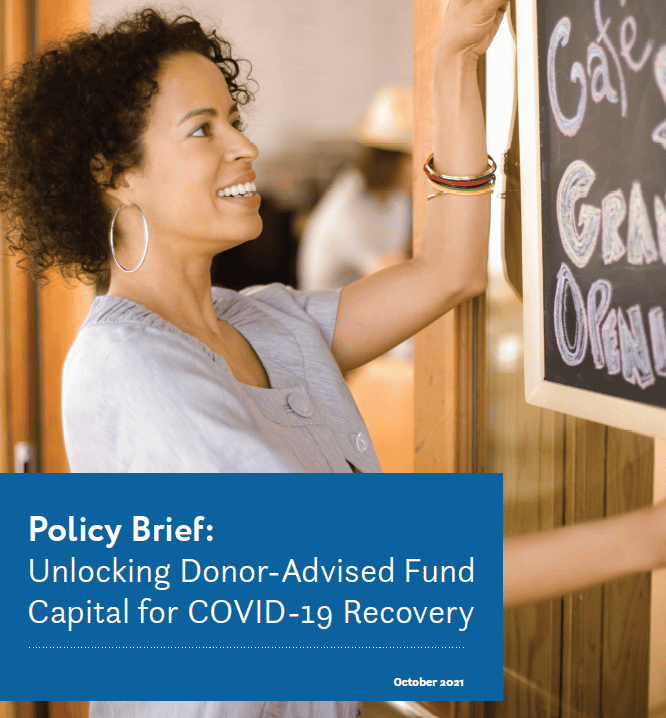
COVID-19 has drawn attention to systemic racial and economic injustice in the United States of America, yet over this unprecedented year, the racial wealth gap has widened even further. Too many BIPOC-owned small businesses have permanently shut down after being denied or simply not qualifying for sustaining capital and Federal stimulus. Now is the time to broaden how we think about philanthropy and what can be possible with large-scale investments from private donors in social and economic justice.
One mechanism ripe for change is Donor-Advised Funds, or DAFs. A DAF is a philanthropic vehicle that allows donors to make tax-deductible charitable contributions to a fund (managed by a sponsoring organization) and then recommend grants from that fund to nonprofit organizations and charitable causes. DAF money is committed to charitable purposes from the outset, but currently, donors can sit on these funds as long as they like, often with no requirement to disburse grants under any particular timeline, and having already received a tax benefit before directing that any grants be made. As a result, DAF donors and sponsors currently leave billions of dollars already committed to charitable purposes on the sidelines: approximately $142 billion, as of the latest available data on the size of the DAF market.
Why is all that money sitting passively a year and a half into this economic crisis when communities continue to struggle with social and economic vulnerabilities? The vast majority of DAFs are invested in traditional exchange traded funds (ETFs) managed for growth. While that investment growth means there will – in theory – be more money for charitable causes down the line, it also means that present-day investments that could immediately transform lives are not being made. Leaving DAF capital invested in traditional vehicles perpetuates the economic status quo, worsening wealth disparities and exposing DAFs to ETF investments that negatively impact people and the planet, undermining donors’ own charitable goals.
PCV has a plan for that. We are proposing a temporary incentive to kickstart catalytic investments in specific areas of need to aid in COVID-19 recovery. The credit would drive the creation of impact investing infrastructure within the DAF industry – helping to institutionalize the systems, practices, and relationships needed to channel billions of dollars currently sitting in traditional investments into undercapitalized social enterprises, CDFIs, affordable housing creation, and economic development initiatives in low-income communities.
And contact your member of congress. By acting now to improve the infrastructure for impact investing within the DAF industry, we can lay the groundwork for inherited wealth from future donors to flow to BIPOC communities and into restorative causes that advance economic justice. We cannot let our momentum for change be eclipsed by inactivity and the wrong incentives–keeping low-income and communities of color continually excluded from opportunity. This is a historic opportunity for systems change, and this is the right time.